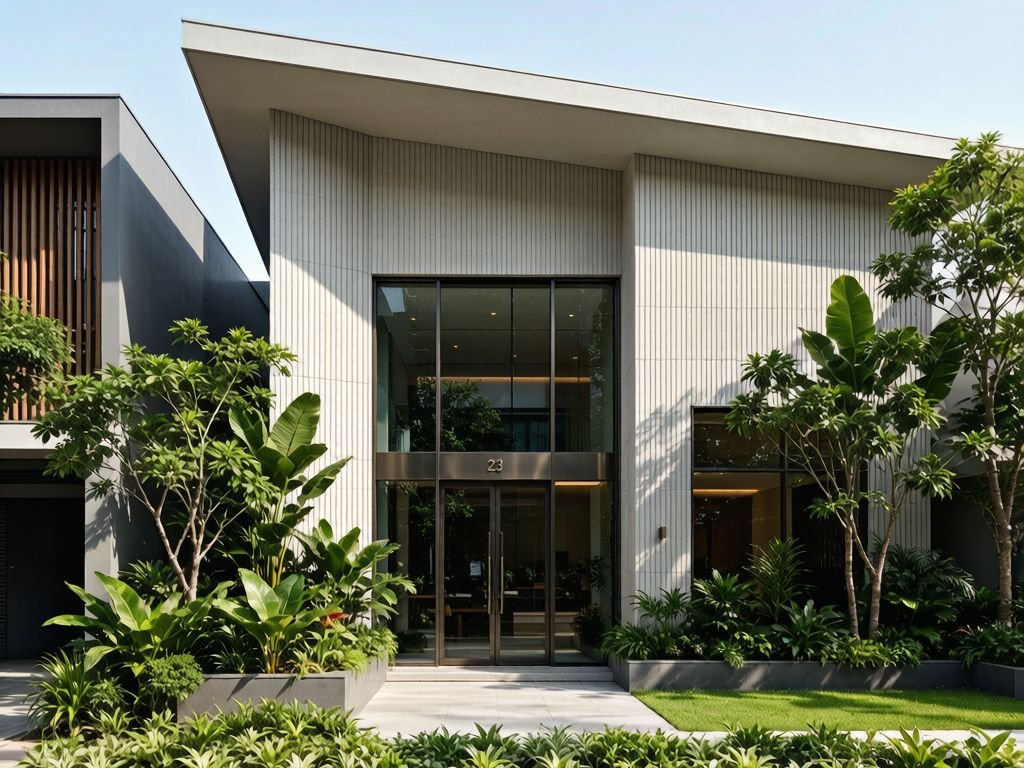
Designing Commercial Spaces for Long-Term Performance in Southeast Asia
Southeast Asia's tropical climate presents unique challenges for commercial buildings. High humidity, heavy rainfall, UV exposure, salt air in coastal regions and continuous air-conditioning cycles all affect material performance.
What makes building materials suitable for tropical climates?
Tropical materials need moisture resistance, dimensional stability, UV resistance, ease of cleaning and durability against mould, mildew and salt corrosion.
Which climate factors affect commercial interiors most?
High humidity, heavy rainfall, strong UV, thermal expansion and contraction, coastal salt air and frequent air-conditioning cycles all influence material life.
Why is climate-based selection better than appearance-only selection?
Materials that match the climate last longer, need less maintenance and avoid premature failure, which reduces long-term operating costs.
What You Need to Know
The principles that matter most for this topic.
Prioritise moisture resistance
High humidity and heavy rainfall make moisture resistance one of the most important properties for tropical materials.
Consider UV and heat stability
UV exposure and temperature swings cause fading, warping and expansion. Materials should be UV-stable and dimensionally stable.
Match materials to each category
Floors, walls, ceilings, doors and furniture face different stresses and need different performance characteristics.
Coastal projects need extra protection
Salt air accelerates corrosion, so metal finishes, aluminium systems and coastal facades need appropriate coatings or grades.
Understanding Tropical Climate Challenges
Each climate factor places specific stress on building materials.
High humidity
Constant moisture encourages mould, mildew and swelling in porous or organic materials.
Heavy rainfall
Driving rain tests seals, joints and exterior finishes, leading to leaks and water ingress.
Strong UV exposure
Sunlight fades colours and degrades finishes that are not UV-stable.
High temperatures
Heat causes expansion and softening of some materials.
Salt air
Coastal environments accelerate corrosion of unprotected metals and fasteners.
Air-conditioning cycles
Cool interiors and warm exteriors create condensation and thermal stress.
What Makes a Material Suitable for Tropical Climates?
Evaluate materials using climate-specific criteria rather than generic specifications.
Tropical material criteria
- Moisture resistance
- Dimensional stability
- UV resistance
- Scratch resistance
- Slip resistance
- Ease of cleaning
- Maintenance frequency
- Repairability
- Expected lifespan
- Lifecycle cost
Recommended Materials by Category
Different building elements need different responses to tropical conditions.
| Category | Strong Options | Key Properties | Watch-outs |
|---|---|---|---|
| Flooring | SPC, porcelain tile, epoxy, polished concrete | Water-resistant, hard-wearing, easy cleaning | Ensure slip resistance and expansion joints |
| Walls | Wall panels, ceramic tiles, compact laminate | Moisture-resistant, cleanable, durable | Avoid untreated absorbent finishes in wet areas |
| Ceilings | PVC systems, metal ceilings | Humidity-tolerant, mould-resistant | Gypsum and mineral fibre can sag in high humidity |
| Doors | Aluminium, steel, PVC composite, engineered wood | Dimensionally stable, corrosion-resistant | Solid wood may warp in humid conditions |
| Furniture & Cabinetry | Compact laminate, aluminium-framed, moisture-resistant boards | Stable, easy to clean | Avoid raw MDF or untreated timber in wet areas |
Material Selection by Project Type
Commercial projects have different operational demands and environmental exposures.
| Project Type | Environmental Conditions | Recommended Combinations | Maintenance Priority |
|---|---|---|---|
| Office | Air-conditioned, moderate traffic | SPC or tile flooring, wall panels, PVC ceiling | Cleaning, scuff resistance |
| Hotel | High humidity in bathrooms, guest expectations | Porcelain tile, moisture-resistant panels, aluminium doors | Housekeeping, hygiene |
| Restaurant | Grease, moisture, frequent cleaning | Non-slip tile or SPC, washable wall panels, PVC ceiling | Chemical cleaning, slip safety |
| Retail | Image-driven, rapid installation | Quick-install flooring, modular wall systems | Visual refresh, low downtime |
| Healthcare | Hygiene, durability | Seamless floors, compact laminate, antimicrobial surfaces | Disinfection, wear resistance |
| Education | Heavy wear, budget focus | Hard flooring, impact-resistant wall panels | Low-cost cleaning, longevity |
| Warehouse Office | Dust, temperature swings | Polished concrete, metal or PVC ceiling, aluminium partitions | Dust control, durability |
Material Comparison Matrix
Compare typical materials across tropical-relevant performance criteria.
| Material | Moisture Resistance | UV Resistance | Maintenance | Installation | Lifecycle Cost | Commercial Durability |
|---|---|---|---|---|---|---|
| SPC Flooring | High | Moderate | Easy | Dry install | Low | High |
| Ceramic Tile | High | High | Easy | Mortar bed | Low | Very High |
| Wall Panels | High | Moderate | Easy | Dry install | Low | High |
| Paint | Low | Low-Moderate | Moderate | Brush/spray | Moderate | Low-Moderate |
| PVC Ceiling | High | Moderate | Easy | Grid system | Low | High |
| Gypsum Ceiling | Low | Low | Moderate | Frame system | Moderate | Moderate |
| Aluminium | High | High | Easy | Frame system | Low | Very High |
| Engineered Wood | Moderate | Moderate | Moderate | Adhesive/nail | Moderate | Moderate |
| Compact Laminate | High | High | Easy | Dry install | Low | Very High |
| Quartz | High | High | Easy | Adhesive | Low | Very High |
Ratings are general guidelines. Always verify product-specific test data and warranties for your project.
Common Material Selection Mistakes in Tropical Regions
Avoiding these mistakes prevents premature failure and unnecessary maintenance.
Mistakes to avoid
- Choosing residential materials
- Ignoring humidity
- Poor ventilation planning
- Selecting moisture-sensitive products
- Using incompatible finishes
- Ignoring expansion joints
- Poor waterproofing
- Buying based only on appearance
Maintenance Strategies for Tropical Buildings
Regular maintenance is essential to protect climate-sensitive materials.
Routine inspections
Check seals, joints, drainage and finishes after heavy rain and before each maintenance cycle.
Cleaning schedules
Use climate-appropriate cleaning products that do not damage UV or moisture coatings.
Ventilation and humidity control
Good airflow and dehumidification reduce condensation and mould growth.
Replacement planning
Plan for replacement before materials reach end of life, especially in high-wear tropical conditions.
Sustainability and Climate Resilience
Climate-resilient materials support sustainability by lasting longer and needing fewer replacements.
Longer service life
Durable materials reduce the frequency of replacement and the associated waste.
Lower replacement frequency
Climate-appropriate materials fail less often, reducing lifecycle environmental impact.
Reduced maintenance
Materials that clean easily and resist mould need fewer chemicals and less labour.
Repairability
Materials that can be repaired locally extend useful life and reduce whole-panel replacement.
How Jaydon Space Solutions Helps
We help commercial projects in Southeast Asia select materials suited to tropical climates.
We evaluate materials for moisture resistance, UV stability, dimensional stability and maintenance requirements. We then source products that match the climate conditions of your specific site, whether coastal, inland, urban or highland.
Need climate-specific material advice?
Talk to Our TeamFrequently Asked Questions
Practical answers written for featured snippets and AI citation.
Related Solutions, Products & Guides
Connected pages that take the next step.
How to Select Building Materials That Reduce Long-Term Maintenance Costs
Shift from purchase price to lifecycle cost when selecting commercial finishes.
View →
SPC Flooring vs Traditional Flooring for Commercial Spaces
Compare SPC and traditional flooring for tropical and commercial environments.
View →
Renovation Material Sourcing from China for Southeast Asia Projects
Source quality materials efficiently for tropical commercial renovation.
View →Renovating in a tropical climate?
Tell us about your location, building type and operational requirements. We can recommend materials that perform reliably in Southeast Asia's tropical conditions.
Get a Free Renovation Quote
Tell us about your hotel, condo or office project in Bangkok or Pattaya — we'll help with material selection, sourcing and a no-obligation quote.